
Guide
Nankhatai history: the authentic Lahore recipe explained
Nankhatai is one of the oldest biscuits still baked daily in South Asia. This guide covers where it came from, how Lahore made it its own, and how to tell a real desi-ghee nankhatai from a mass-produced cookie.
From Surat to the subcontinent
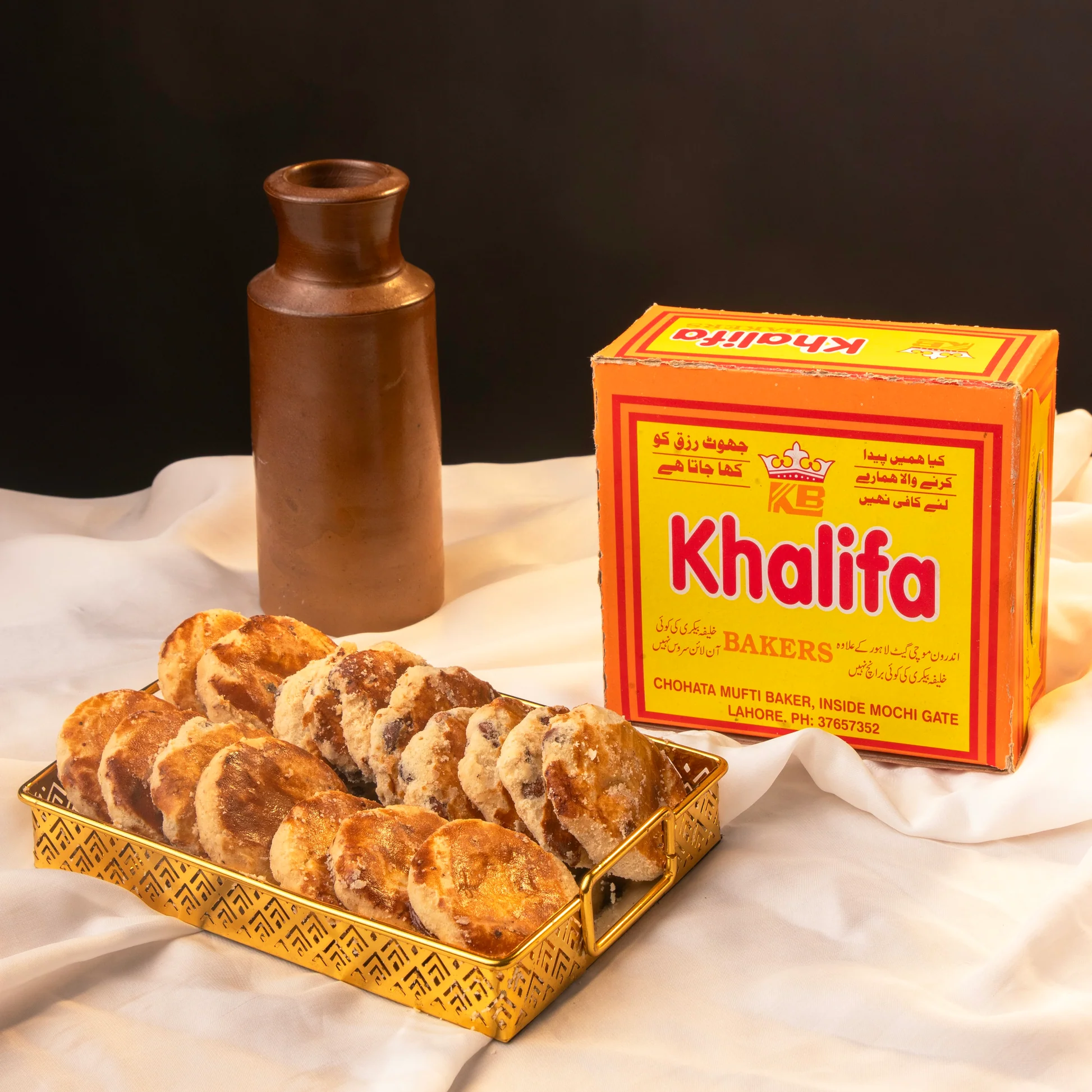
The most repeated account places nankhatai's origin in 16th-century Surat, where a Dutch bakery serving departing ships was left with unsold bread. Dried and re-baked, it became a hard rusk that local customers enjoyed — and, once the bakery passed into Persian hands, it was reworked with clarified butter, sugar and gram flour into something closer to the biscuit we know. The name preserves that mixed heritage: the Persian nan for bread, and khatai for biscuit.
As trade routes carried it north, each region adjusted the flour. Gujarat leaned on gram flour, Bombay bakers added semolina for crunch, and Punjab settled on a fine wheat-flour dough enriched with more ghee — softer inside, sandier on the tongue.
How Lahore made it its own
Inside the walled city, the bazaars around Mochi Gate became the centre of nankhatai baking. The Lahori style is thicker and heavier than its western cousins, cracked across the top, and studded with almonds. It was made to be shared over tea, sent in trays to weddings, and gifted at Eid — which is why old-city bakeries still sell it by the half kilo rather than the piece.
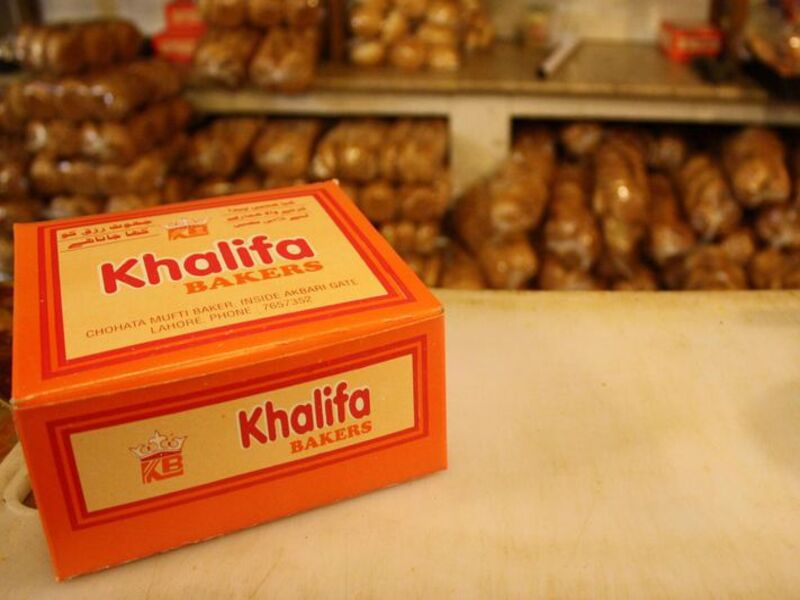
Khalifa Bakers opened in that bazaar in 1925, when Master Baker Baba Umar set out to perfect the almond nan khatai. Four generations later the dough is still mixed by hand each morning, and the same slow oven gives the biscuit its aroma.
What makes a handmade nankhatai different
- Pure desi ghee, not shortening. Ghee has no water, so the dough never develops gluten strands — that is what creates the sandy crumb. Palm-oil shortening gives a waxy mouthfeel and a flat, sweet finish.
- No eggs, no leavening shortcuts. An authentic dough relies on creamed ghee and sugar for lift, with only a pinch of baking soda.
- A rested dough. Resting lets the semolina or flour hydrate, so the biscuit cracks evenly on top instead of spreading.
- A slow, low bake. Traditional ovens run cooler for longer, drying the biscuit through rather than browning the outside.
- Small batches. Ghee-rich biscuits stale faster than factory cookies, which is why they are baked daily and packed the same day.
How to serve and store it
Nankhatai is at its best with strong doodh patti or a cup of kahwa. Keep it in an airtight tin at room temperature for two to three weeks; refrigeration adds moisture and softens the crumb. If a box has travelled, three minutes in a warm oven brings the aroma straight back.
Frequently asked questions
- What is nankhatai?
- Nankhatai is a shortbread-style biscuit from the Indian subcontinent, made with flour, semolina or gram flour, sugar and clarified butter (desi ghee), scented with cardamom and often topped with almonds or pistachios. The name joins the Persian word nan (bread) with khatai, a word for biscuit.
- Where did nankhatai originate?
- The biscuit is widely traced to Surat in the 16th century, where Dutch bakers adapted their bread recipe for local tastes. It travelled north through Punjab, and Lahore's old-city bakeries around Mochi Gate turned it into the thick, crumbly almond nankhatai the city is known for today.
- What makes a nankhatai authentic?
- Pure desi ghee instead of vegetable shortening, no eggs, a rested dough, and a slow bake in a traditional oven. That combination produces the sandy, melt-in-the-mouth crumb that mass-produced cookies made with palm oil cannot replicate.
- How long does nankhatai stay fresh?
- Kept in an airtight container at room temperature, ghee-based nankhatai stays fresh for two to three weeks. Avoid the refrigerator — moisture softens the crumb and dulls the cardamom aroma.
Taste the 1925 recipe yourself
Half-kilo and one-kilo boxes of almond and saada nankhatai, baked this morning in Mochi Gate and dispatched the same day across Pakistan.
Shop nankhatai boxes →